
Staying in dark corners without getting any attention, simple 2000 pennies usually represent only their face value of one cent.
Finding a rare error changed the financial situation for some owners because the specific 2000 penny value reached thousands of dollars at public auctions.
Caused by small production mistakes, a huge difference exists between the face value and the market price according to professional experts.
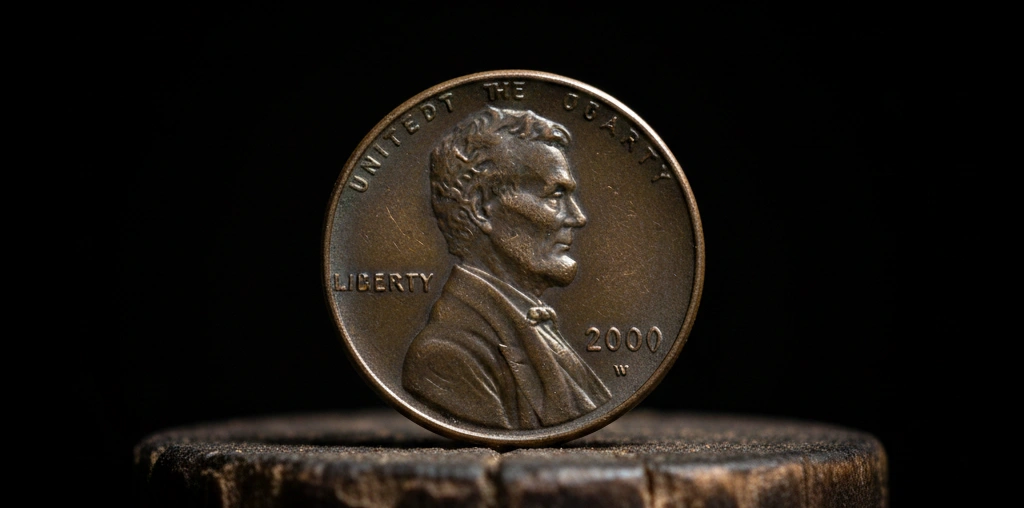
Expensive items for the modern market appeared because the mint sometimes used wrong machines or low-quality metal during the process.
Losing money every day, people spend rare coins in local shops because they never check the small details on the metal surface.
Study the following information, and you can learn how to identify valuable pennies using a simple magnifying glass.
The 2000 Wide AM Penny Error
Involving the space between the letters A and M in the word "AMERICA", the most famous error of this year is easy to identify.
Normally, having the letters A and M touching each other at the bottom, the standard 2000 penny remains worth exactly one cent.
Finding a version with a visible gap between these two letters, a collector can sell the coin for a much higher price.
Meant for proof coins only, a special reverse die accidentally struck these "Wide AM" pennies for general circulation.
Looking at historical price data, we can see a steady increase in the value of this variety over the last twenty years.
Coin Condition | Market Value (USD) | Annual Growth (%) |
Average Circulated | $5 - $20 | 5% |
Uncirculated (MS-65) | $150 - $300 | 12% |
High Grade (MS-67+) | $2,500 - $3,500 | 18% |
Auctioning a perfect 2000 Wide AM penny, Heritage Auctions recorded a final price of over $3,000 for one single item.
Check your change for this specific gap with the coin value checker app, and you must look at the bottom of the letters to see the clear separation.
Off-Center Strike Errors
Struck off-center by heavy machines, another category of valuable coins includes pennies with missing parts of the design.
Because of the fast production process, the metal blank does not sit correctly in the machine before the heavy strike happens.
Showing only a portion of the image, these unusual coins attract a lot of interest from professional investors.
Missing 10% to 50% of the design, the coin becomes a unique object having no identical copies in the entire world.
After measuring the percentage of the missing image, experts determine the final price based on the visibility of the date.
If the coin retains the full date "2000", the value increases significantly compared to coins without any numbers.
Error Percentage | Estimated Value (USD) | Price Change (5 Years) |
10% Off-Center | $5 - $15 | +15% |
25% Off-Center | $25 - $50 | +22% |
50% Off-Center (with date) | $150 - $450 | +40% |
Reaching a record price of $500, a 50% off-center 2000 penny was the star of a major auction recently.
Holding these coins for many years, owners usually see a steady increase in market demand and financial value.
The 2000-P Doubled Die Obverse
Searching for double lines on the copper surface, collectors often find the rare "Doubled Die" variety.
The machine strikes the image twice with a small shift because of a mistake during the creation of the coin die.
See double letters in the word "LIBERTY" or the phrase "IN GOD WE TRUST" and you can identify this rare version.
Examining the date "2000", some coins show a clear secondary image under the main numbers on the obverse side.
Representing a small percentage of the total production, these coins are very hard to find in regular circulation today.
Buying these items at current market rates, investors expect a high return in the future because the supply is very low.
Average Price (MS-63): $25.00
High Grade Price (MS-66): $150.00
Record Sale Price: $650.00
Compared to the original cost of $0.01, the profit percentage reaches 6,500,000% for the record sale of this variety.
Die Caps and Other Errors
Representing the most extreme types of errors, die caps occur when a coin gets stuck on the upper hammer die.
Striking many other blanks with the stuck coin, the machine creates a deep "cup" shape with high edges.
Looking like a small metal bowl, a 2000 die cap penny is extremely rare and very easy to spot in a pile of coins.
Find such an item in a bag of change, and you can immediately earn hundreds of dollars from a professional dealer.
Happening when a previously struck coin sticks to the die, brokage errors hit the next blank with a mirror image.
Creating a mirror design on the opposite side, this error looks very unusual to the untrained eye of a regular person.
Error Type | Record Price | Yearly Value Increase |
Full Die Cap | $800 | 10% |
100% Brokage | $1,200 | 14% |
Partial Brokage | $250 | 8% |
To prove the rarity of these mistakes, the US Mint usually destroys these coins before they leave the factory.
Escaping the quality control system, these 2000 pennies became famous icons of modern numismatics.
Condition and Grading Standards
Evaluating a coin requires understanding the grading scale from 1 to 70 used by professional grading companies.
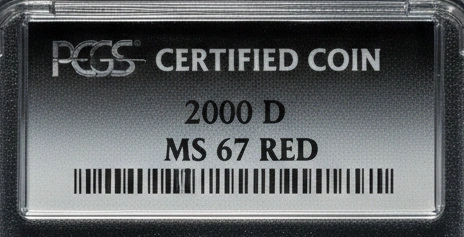
Being the most respected organizations, PCGS and NGC provide official certificates for rare 2000 pennies.
Sending a coin for grading, an owner must pay a specific fee to receive a plastic holder with a certified grade.
If it receives a grade of MS-68 or higher, a regular 2000 penny can become worth $100 without any errors.
Losing value through scratches and dirt, circulated coins rarely reach these high price levels on the market.
Protecting your coins from air and moisture, you can preserve the original red color of the copper-plated zinc.
Turning brown over time, pennies lose their "Mint State" status and their high market premium.
Statistics show that red (RD) coins sell for 30% more than red-brown (RB) coins of the same year.
Market Statistics and Financial Growth
Analyzing the last ten years of sales, we can see a clear upward trend in the prices of 2000 pennies.
Growing faster than many traditional bank accounts, rare coin values offer a different way to store wealth.
Calculating the average return for error coins, experts found a 12% annual increase in specialized auctions.
If we compare this to the 2% inflation rate, we see that coins are a good protection against losing money.
Investors now see values near $300 or more for 2000 Wide AM pennies bought in 2010 for only $100.
Tripling the initial investment, these small copper objects perform better than many stock market sectors.
Monitoring auction results regularly, collectors stay updated on the current prices in the industry.
How to Inspect Your 2000 Pennies
Developing a system for checking coins, you should start by separating all pennies dated 2000 from your change.
Using a bright desk lamp, you must look at the surface from different angles to find hidden marks.
Focusing on the "AM" in AMERICA, you can quickly find the most common valuable variety of the year 2000.
Checking the edges for extra thickness with the coin identifier app, you might discover a "Double Rim" or a "Clipped Planchet" error.
Placing the coins in soft paper envelopes, you prevent new scratches from lowering the future market value.
Documenting every find in a notebook, you create a professional record of your private coin collection.
Spending only a few minutes every day, you can eventually find a coin worth a week's salary.
Regular people transform a boring hobby into a profitable activity as they learn about these important details.
Conclusion
Understanding the hidden value of 2000 pennies, we see that "small change" is not always small in reality.
Focusing on errors, grades, and market trends, anyone can identify coins worth more than one cent.
Keeping your eyes open while handling money, you participate in a global market of historical artifacts.
Remembering the record prices mentioned in this article, you know that a single penny can be worth $3,000.
Start your search today and you might find the next big auction winner in your own house.