
It’s often the first step into paper money.
Banknotes with a face value of 10 dollar bill represent a primary object of interest for paper currency researchers.
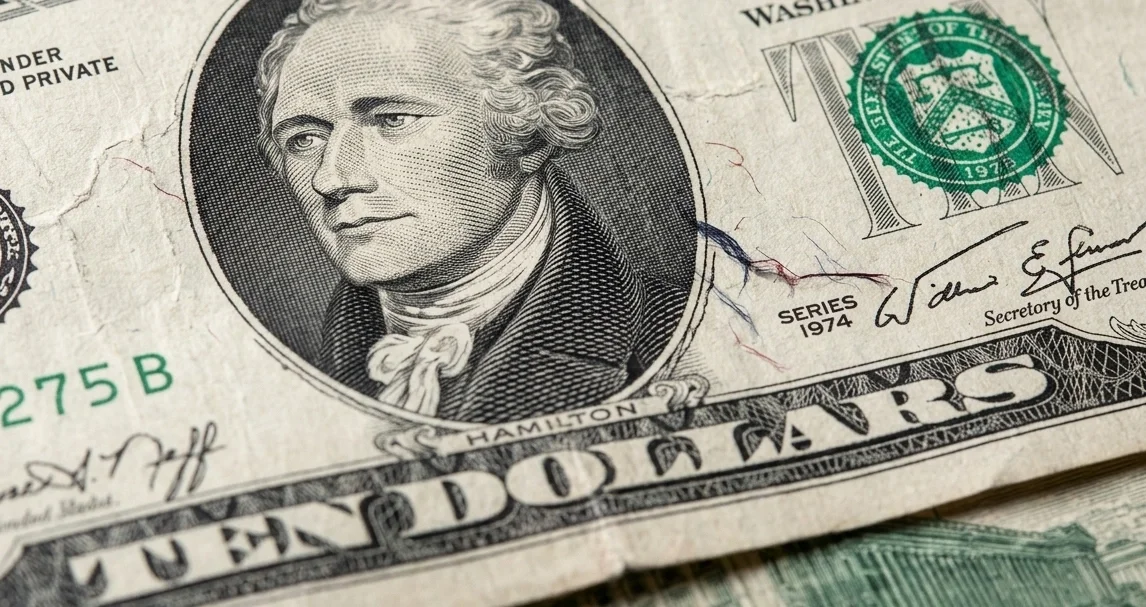
This specific denomination features high circulation intensity and regular security system updates.
Production standards at the Bureau of Engraving and Printing exclude any size deviations.
Paper bases possess unique properties of durability and chemical passivity.
Characteristic | 2006–2026 Series Note Parameters |
Note Length | 155.956 mm |
Note Width | 66.294 mm |
Total Mass | 1.00 grams |
Material Thickness | 0.11 mm |
Fiber Composition | 75% cotton and 25% linen |
Primary Background | Yellow, red, orange |
Using natural fibers ensures a characteristic crisp sound during physical contact.
Integrating synthetic security threads into the paper structure occurs during the sheet-casting stage.
Blue and red security fibers are distributed randomly across the entire surface of the blank.
Hierarchy of Authenticity Signs and Security Systems
Modern NexGen series $10 bills are equipped with a complex array of elements to prevent forgery.
Control is performed through visual methods and specialized scanning equipment.
Technological Barriers to Copying:
Security Thread: A vertical plastic strip with USA TEN text and a flag image.
Watermark: An Alexander Hamilton portrait located in the blank space on the right.
Color-Shifting Ink: A 10 numeral in the bottom right corner changing from Copper to Green when tilted.
Microprinting: THE UNITED STATES OF AMERICA and TEN DOLLARS USA text under the portrait and along edges.
Eurion Constellation: A system of small circles blocking the operation of copying hardware.
Light source → Rays passing through the paper → Displaying hidden watermarks.
Exposure to ultraviolet radiation causes the security thread to glow orange.
This spectral feature serves as the primary marker for automated verification in bank terminals.
Production Statistics and Manufacturing Cycles
Printing plans are formed based on Federal Reserve data regarding economic cash requirements.
Ten-dollar bills possess a shorter lifespan compared to high-denomination banknotes.
Production Volumes by Reporting Periods:
2022: 512,000,000 units
2023: 435,200,000 units
2024: 486,400,000 units
2025: 502,000,000 units
Average active circulation period lasts approximately 4.5 years.
High wear rates lead to a shortage of perfect condition specimens ten years after release.
Worn note destruction → Reducing secondary market supply → Rising collector premiums.
Market Indicators and Auction Values
Pricing in the $10 US segment demonstrates steady growth for rare series.
Standard banknotes from circulation are valued strictly at face value.
Recorded Records and Market Prices:
1933 Silver Certificate (Grade 66): $70,000
1928 Gold Certificate (Grade 67): $6,500
1863 Legal Tender Note: $120,000
Modern Star Note (2017A): $45
Printing Errors with Double Seals: $1,500–$3,200
Average collector price dynamics for $10 notes: 2018–2022: +2% annually → 2023–2026: +5.5% annually.
Rising demand for banknotes with PMG professional grading results from evaluation transparency.
Investment interest shifts toward 1928–1934 series due to their historical significance.
Obverse Design Structure
Front side design underwent changes in 2006 to integrate colored background elements.
Central images maintain traditional metal engraving styles.
Key Obverse Zones:
Main Portrait: Alexander Hamilton without an oval frame.
Liberty Torch: A red symbol to the left of the portrait.
WE THE PEOPLE Text: Gray constitutional text in the background.
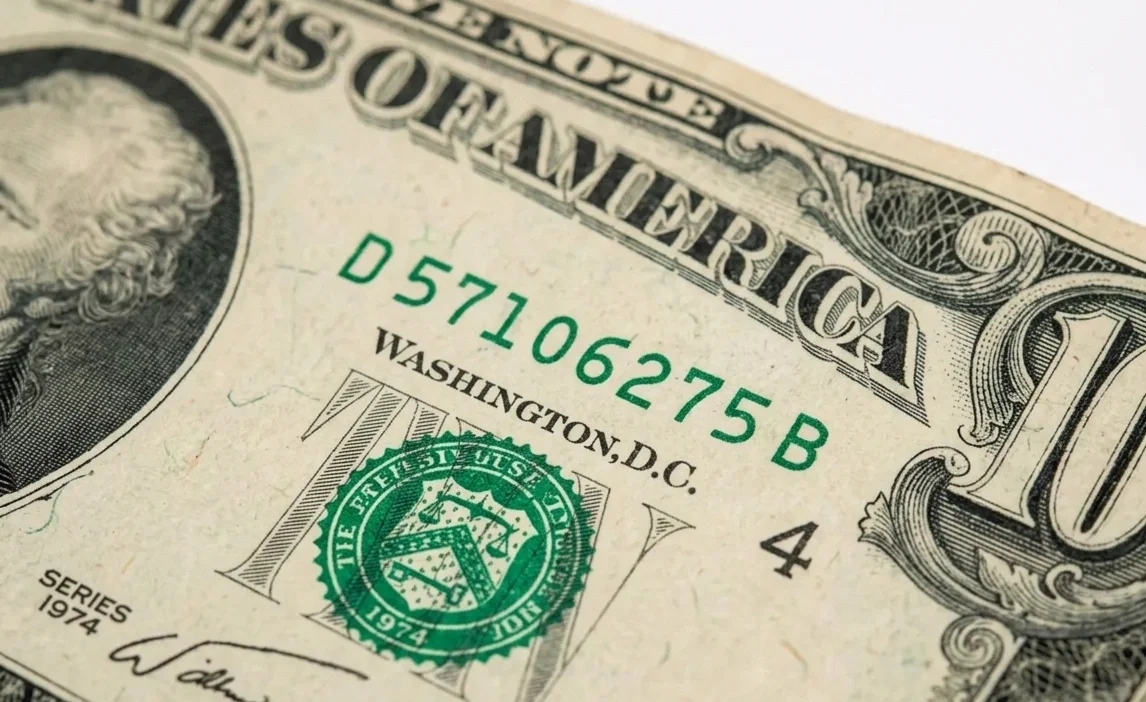
Serial Number: A letter and number combination defining the bank and mintage.
Black Fed Seal: A symbol on the left indicating one of 12 reserve banks.
Using intaglio printing creates a tactilely perceptible relief on THE UNITED STATES OF AMERICA text.
Running a fingertip across the surface allows for detecting ink roughness.
Lacking relief indicates usage of flat printing methods in counterfeit production.
Serial Number and Replacement Note Analysis
Numismatic value often depends on the uniqueness of the digital sequence.
Automated numbering excludes combination repetition within a single series.
In-Demand Number Categories:
Radars: 45677654.
Low Numbers: 00000001–00000100.
Ladders: 12345678.
Solids: 88888888.
A star symbol at the end of a serial number indicates a replacement for a defective sheet.
April 2026 market prices for a 2017 Star Note in Gem Uncirculated condition stand at $120.
Probability of finding a rare number in a bank pack → 0.005%.
Note removal from circulation happens early due to professional dealer activities.
Reverse and Architectural Illustration Features
Back sides contain a detailed engraving of the US Treasury Building.
Illustrations display the north facade of the structure.
Detailing Reverse Elements:
Main Entrance: A colonnade executed with high line precision.
IN GOD WE TRUST Inscription: A mandatory motto above the building.
Guilloche Patterns: Complex geometric weaves around the perimeter.
Large 10 Numerals: Placed in corners for easy denomination identification.
Yellow reverse backgrounds contain small 10 digits distributed across the field.
This solution prevents high-quality color separation during scanning attempts.
Existing 2026 designs remain relevant despite ongoing discussions regarding portrait replacement.
Design Evolution and Cycle Changes
Ten-dollar bill history reflects progress in the field of printing technology.
Appearance modifications always relate to the necessity of protecting against new forgery methods.
Period | Series Type | Technical Innovation |
1928–1989 | Small Size | Standard printing without extra security |
1990–1999 | New Design | Microprinting and security thread integration |
2000–2005 | Big Head | Enlarged portrait within an oval frame |
2006–2026 | NexGen | Colored background, no frames, new holograms |
Rarities from the 1934 period with gold seals have maximum price growth potential.
Reducing physical volumes of old series leads to price increases of 8% annually.
Notes from the 2006 issue are starting to enter the collector asset category if found in perfect condition.
Counterfeit Detection Methods
Currency forgery technologies adapt to existing security measures.
Bank systems in 2026 utilize multi-factor analysis.
Reasons for Rejecting Suspicious Notes:
Missing thread luminescence: Originals glow bright orange.
Flat portrait image: Lacking engraving depth.
Poor color-shifting ink: No clear transition from Copper to Green.
Blurred microtext: Letters merging when viewed via the best coin appraisal app.
Verification Algorithm: Tactile Contact → Visual Inspection → Back-lighting → UV Analysis.
Using iodine-based markers loses effectiveness due to high-quality counterfeit treatment.
Infrared detectors remain the most reliable verification method for retail trade.
Genuine $10 notes possess a specific IR light absorption pattern.
Long-term Conservation and Grading Rules
Paper base destruction occurs under the influence of aggressive environmental factors.
Collectors utilize specialized accessories to protect investments.
Risk Factors for Paper Money:
Humidity above 60%: Risk of fungus colony development.
Direct Sunlight: Fading of organic ink pigments.
Packaging Acidity: Regular plastic releases gases that destroy fibers.
Mechanical Deformations: Creating permanent creases at fold locations.
Utilizing holders made of clear plastic ensures chemical neutrality.
Storage in controlled temperatures of 18–22 degrees Celsius extends banknote life for decades.
Certification by services like PCGS Banknote fixes the condition at the time of inspection.
Comparative Analysis with the 5 Dollar Denomination
Ten-dollar notes are often compared with five-dollar notes regarding usage frequency.
Both denominations belong to the group of most-worn currency units.
Distinguishing $10 Features:
More complex background color scheme.
Presence of a non-President US portrait.
Lower printing volume compared to $5 bills.
Higher auction value for rare historical series.
2025 Statistics: 5-dollar mintage was 750 million units → 10-dollar mintage was 502 million units.
Smaller mintages create natural conditions for rare number shortages.
Researchers note higher execution quality of engravings on the ten-dollar denomination.
Legal Status and Old Issue Exchange Rules
US Government officials confirm legal tender status for all notes since 1861.
Removing old series from circulation happens naturally through the banking system.
Rarity Circulation Features:
Gold Certificates: Legalized for ownership and exchange after 1964.
Silver Certificates: Exchanged for modern dollars at face value.
Red Seal Notes: Possess high collector premiums.
Large-size Notes: Require expert evaluation before realization.
Values for old $10 notes in poor condition exceed face value by 2–3 times.
Selling rare specimens through auctions ensures maximum profit.
Using antique money for retail payments is considered economically inefficient.
Digital Transaction Impacts on the Cash Market
Reducing physical transaction shares in 2024–2026 changes the numismatic landscape.
Fewer notes in cash registers complicates the search for unique serials.
Digitalization Consequences for the Market:
Price growth for unused specimens in bank straps.
Rising importance of professional grading.
Transition of collector trading to blockchain platforms for provenance confirmation.
Increased interest in banknotes as tangible historical artifacts.
Central bank digital currencies do not replace the aesthetic value of engraving.
Traditional banknotes are perceived as a means of preserving anonymity and capital.
Physical dollar demand in 2026 remains stable on an international level.
Quick Verification Guide for Beginners
Detail study starts with simple control steps, and the coin appraisal app free.
Original banknotes possess a set of features unavailable to consumer copying.
Control Element | Action | Original Result |
Relief | Rub Hamilton's collar | Noticeable roughness |
Color | Tilt the 10 numeral | Copper to Green shift |
Thread | View against light | USA TEN text on the strip |
Paper | Back-lighting | Right-side watermark |
Orange thread luminescence in UV rays remains the main criterion.
Absence of any feature indicates a risk of forgery.
Professional detectors with magnetic sensors reveal ferromagnetic particles in the ink.
Genuine $10 notes possess a specific magnetic map.